
 (1).jpg)
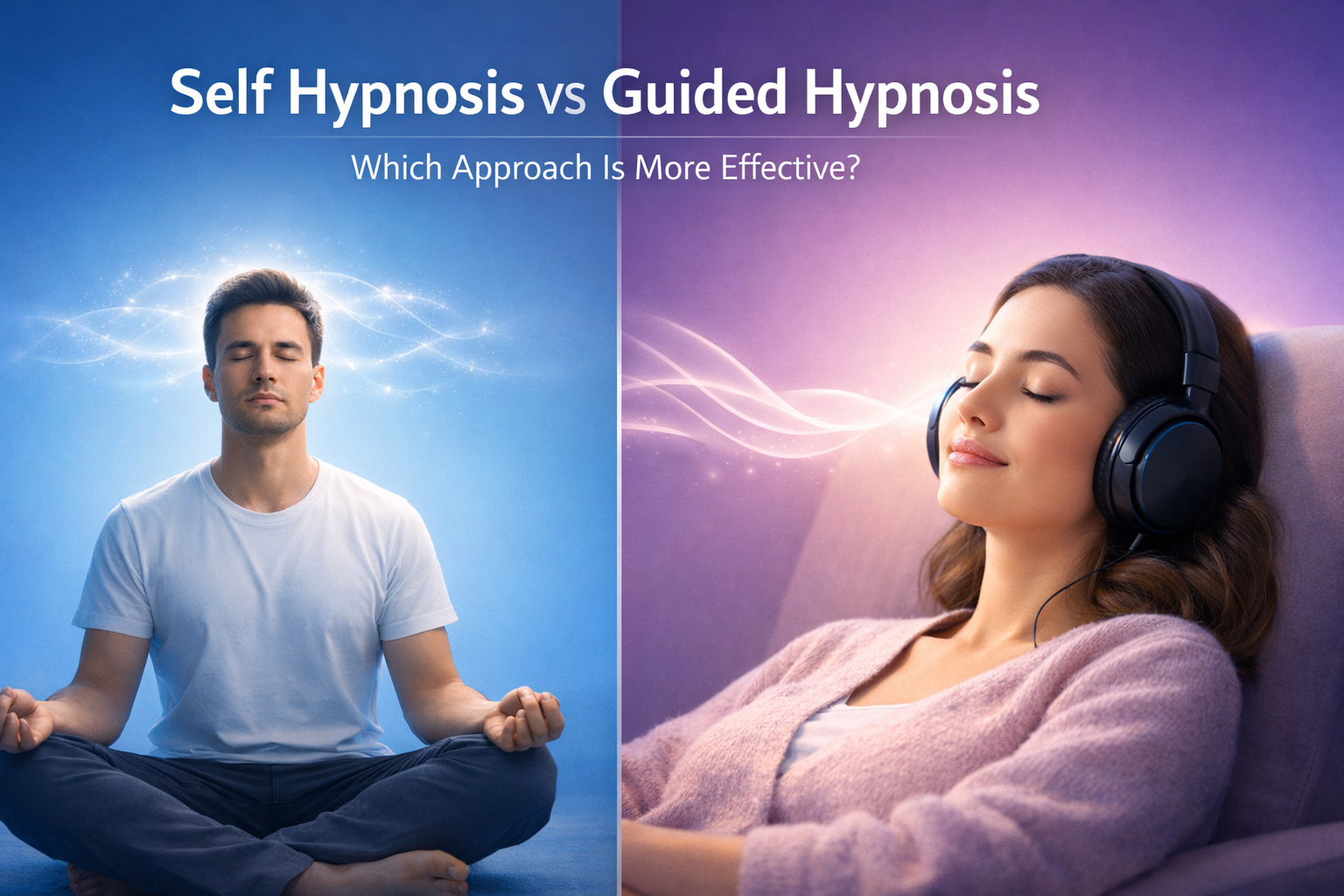
Self Hypnosis vs Guided Hypnosis: Which Approach Is More Effective?
As interest in hypnosis continues to grow, many people encounter two commonly discussed approaches: self hypnosis and guided hypnosis. While both involve focused attention and intentional mental engagement, they differ significantly in structure, depth, and application. Understanding these differences is essential for anyone considering hypnosis as part of personal development or therapeutic work.
The question is not which method is universally better, but which approach is more appropriate for a specific goal, level of experience, and psychological context. Self hypnosis offers independence and flexibility. Guided hypnosis provides structure and professional direction. Each has value when applied correctly.
This article examines both approaches in detail, clarifying how they work, their strengths, limitations, and when one may be more suitable than the other.
What Is Self Hypnosis?
Self hypnosis is the practice of intentionally guiding oneself into a focused and relaxed mental state without the direct presence of a practitioner. It involves using techniques such as controlled breathing, visualization, mental repetition, or structured scripts to achieve concentration and internal awareness.
In self hypnosis, the individual acts as both the guide and the participant. The process often begins with relaxation techniques, followed by focused imagery or internal suggestions aimed at supporting a specific goal. These goals may include stress reduction, improved concentration, confidence enhancement, or habit reinforcement.
Because self hypnosis is self-directed, it requires a certain level of mental discipline and clarity. The individual must be able to sustain focus, minimize distractions, and apply suggestions intentionally. For people who are reflective and comfortable with independent mental exercises, self hypnosis can be a useful tool for maintenance and reinforcement.
However, self hypnosis has limitations. It may not be sufficient for addressing deeply rooted emotional patterns, unresolved trauma, or complex behavioral issues. Without external guidance, individuals may struggle to identify subconscious blocks that operate beyond conscious awareness.
What Is Guided Hypnosis?
Guided hypnosis involves a trained practitioner who facilitates the hypnotic process. The practitioner leads the individual into a focused state, monitors responses, and introduces therapeutic techniques aligned with the individual’s goals.
Unlike self hypnosis, guided hypnosis is interactive. The practitioner observes subtle cues, adjusts pacing, and ensures that the individual remains comfortable and engaged. This responsiveness allows for deeper exploration of emotional patterns and subconscious associations.
Guided hypnosis sessions are structured with clear intent. They often begin with discussion and goal clarification, followed by induction techniques and targeted therapeutic work. Because the practitioner brings professional experience, guided hypnosis can address complex concerns with greater precision.
This approach is particularly beneficial for individuals who are new to hypnosis or who are working through emotionally sensitive issues. External guidance reduces the risk of confusion, misinterpretation, or emotional overwhelm.
Differences in Depth and Focus
One of the primary differences between self hypnosis and guided hypnosis lies in depth. While both can create a focused state, guided hypnosis often facilitates deeper access to subconscious material. The presence of a practitioner helps bypass mental resistance that may arise when working alone.
In self hypnosis, the conscious mind remains highly involved in directing the process. This can limit the ability to access deeply stored emotional patterns. In guided hypnosis, the practitioner’s structured language and pacing help the conscious mind relax more fully, allowing subconscious processes to emerge more naturally.
This does not mean self hypnosis is ineffective. It simply means its depth depends heavily on the individual’s experience and focus.
Learning Curve and Skill Development
Self hypnosis requires practice. Individuals must learn how to induce a focused state, maintain attention, and craft suggestions that are constructive and aligned with their goals. Without proper understanding, suggestions may be vague or ineffective.
Guided hypnosis, by contrast, reduces the learning curve. The practitioner handles the structure and direction, allowing the individual to focus solely on internal experience. Over time, individuals who experience guided hypnosis often develop the skills necessary to practice self hypnosis more effectively.
In this sense, guided hypnosis can serve as a foundation for independent practice.
Emotional Safety and Support
When working with emotionally sensitive material, guided hypnosis generally provides a higher level of safety. The practitioner can monitor emotional intensity and adjust techniques accordingly. If strong emotions surface, professional guidance ensures they are processed constructively.
In self hypnosis, individuals must manage emotional responses independently. While this may be manageable for mild stress or habit reinforcement, it can be challenging when deeper emotional material arises.
For this reason, individuals addressing trauma, persistent anxiety, or long-standing behavioral patterns often benefit from guided hypnosis before attempting self-directed work.
Flexibility and Accessibility
Self hypnosis offers unmatched flexibility. It can be practiced anywhere, without scheduling appointments or relying on external availability. This makes it practical for daily reinforcement of positive patterns and stress management.
Guided hypnosis requires coordination and professional support, which may involve cost and scheduling considerations. However, this structure often enhances commitment and consistency, particularly for individuals who struggle with self-discipline.
Both approaches offer accessibility in different ways. Online guided hypnosis has further expanded access, allowing individuals to work with qualified practitioners regardless of location.
Effectiveness for Specific Goals
For goals such as relaxation, focus improvement, or reinforcing positive habits, self hypnosis can be highly effective when practiced consistently.
For deeper behavioral change, emotional healing, or complex psychological concerns, guided hypnosis often provides greater effectiveness due to professional assessment and tailored techniques.
It is important to recognize that effectiveness is not determined solely by the method, but by alignment between the method and the goal.
Combining Both Approaches
Many individuals find value in combining self hypnosis and guided hypnosis. Guided sessions provide structured exploration and professional insight. Self hypnosis reinforces progress between sessions and strengthens personal autonomy.
This combined approach creates continuity. Guided hypnosis initiates change at a deeper level, while self hypnosis supports integration into daily life.
Over time, individuals often become more confident in using self hypnosis independently, supported by the foundation established through guided sessions.
A Balanced Perspective
Self hypnosis and guided hypnosis are not competing methods. They are complementary tools within the broader framework of hypnosis therapy.
Self hypnosis empowers individuals to practice focus and mental regulation independently. Guided hypnosis provides structured support for deeper exploration and meaningful change.
Choosing between the two depends on experience level, emotional readiness, and the complexity of the goal. For some, self hypnosis is sufficient. For others, guided hypnosis offers clarity and depth that cannot be achieved alone.
Understanding these differences allows individuals to make informed decisions rather than relying on assumptions. When used appropriately, both self hypnosis and guided hypnosis can contribute to personal growth, emotional balance, and long-term mental well-being.